
Ford F-150 Dashboard Warning Lights, Symbols and Meanings
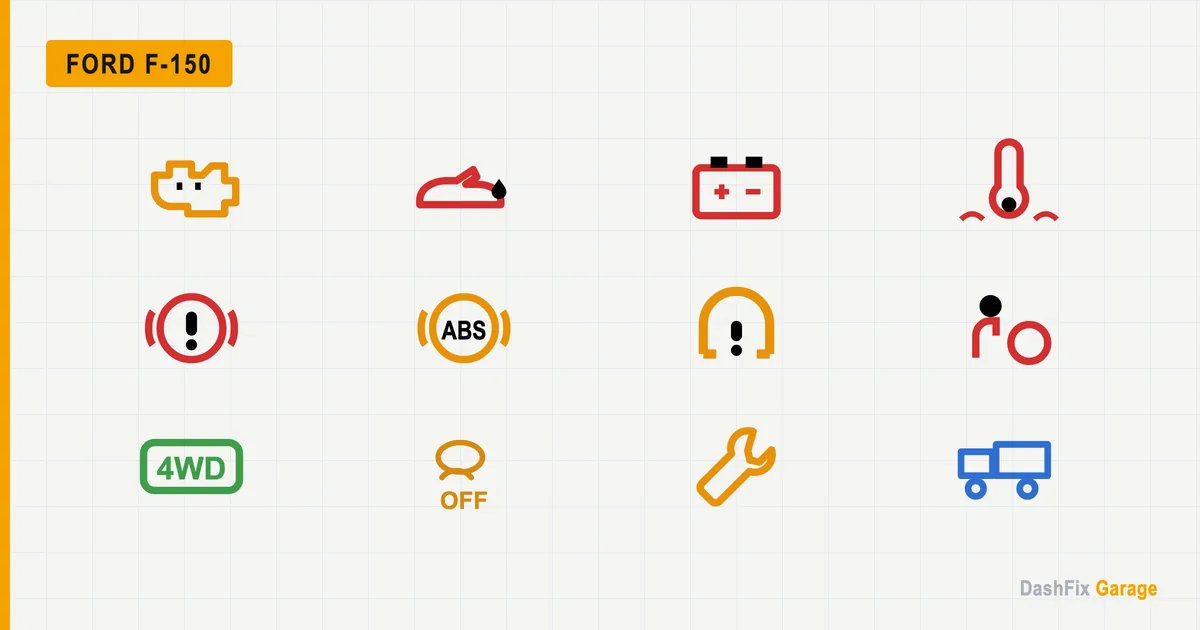
Ford F-150 warning lights use color to tell you how serious a problem is. Red lights require you to stop driving as soon as it is safe to do so. Amber or yellow lights mean you can usually keep driving, but the truck needs attention before the next long trip. Blue and green lights are informational - they confirm a system is active, not that something is wrong.
The table below covers every common F-150 warning symbol, what triggers it, and the right response. Truck-specific lights like 4x4, Tow/Haul, AdvanceTrac, and Trailer Sway are included.
Ford F-150 warning light colors explained
Ford uses four colors on the F-150 instrument cluster, each with a different urgency level:
- Red - Stop as soon as it is safe. Continuing to drive risks serious engine or safety damage. Examples: oil pressure, coolant temperature, brake system.
- Amber or yellow - Drive with caution. Schedule service before your next road trip. Examples: check engine, TPMS, ABS, traction control.
- Blue - A system is active and working normally. The most common example is the high beam headlight indicator.
- Green - Informational. A feature is switched on. Tow/Haul mode, turn signals, and cruise control use green.
When a red light appears, your first move is to find a safe place to pull over and shut the engine off - not to drive to a dealership. Calling for a tow is cheaper than a new engine.
Ford F-150 warning light symbols and meanings
The table below covers the most common F-150 warning symbols, the color they illuminate, what they mean, and what to do when you see them.
| Symbol | Warning light | Color | What it means | What to do |
|---|---|---|---|---|
| Check Engine / Service Engine Soon | Amber | The powertrain control module has stored a fault code. Common causes include a loose or missing gas cap, a failed oxygen sensor, a bad catalytic converter, or spark plug issues. | Check the gas cap first - tighten it until it clicks. If the light stays on after a day of driving, scan for codes with an OBD-II reader. A steady amber light is not an emergency but should be diagnosed soon. A flashing check engine light means the engine is misfiring - reduce speed and get it checked immediately. | |
| Wrench / Powertrain Fault | Amber | A fault has been detected in the powertrain or electronic throttle control system. The truck may enter a reduced-power 'limp mode' to protect the drivetrain. Common causes are a faulty throttle body sensor, transmission issue, or PCM data error. | Do not ignore this light. Scan for fault codes right away. If the truck feels sluggish or unresponsive, drive slowly to a shop or pull over and call for service. This light is different from the check engine light - it points specifically to drivability and throttle/transmission faults. | |
| Oil Pressure Warning | Red | Engine oil pressure has dropped below a safe level. Running an engine with low oil pressure causes catastrophic damage within minutes. | Pull over immediately and shut the engine off. Check the oil level with the dipstick. If the oil level is fine and the light stays on, do not restart the engine - call for a tow. Low oil pressure can result from a failing oil pump, a serious leak, or oil that has broken down completely. | |
| Battery / Charging System | Red | The charging system is not maintaining battery voltage. The alternator may be failing, a drive belt may be broken, or there is a loose or corroded battery connection. | Turn off non-essential accessories (AC, heated seats, stereo) to reduce electrical load and drive directly to a shop. If the light comes on while driving, you have a limited time before the battery discharges completely and the engine stalls. Do not ignore this. | |
| Engine Coolant Temperature | Red (overheating) or Blue (cold) | Red means the engine is overheating. Blue means the engine is still warming up - this is normal on cold starts and goes away within a few minutes. | If red: pull over, shut the engine off, and let it cool for at least 30 minutes before checking the coolant level. Never open the radiator cap when hot. Check for coolant leaks under the truck. If blue: just let the engine warm up normally. | |
| Brake System Warning | Red or Amber | Red with 'BRAKE' text usually means the parking brake is engaged, or brake fluid is critically low. Amber can indicate a brake system fault that does not involve fluid level. | First, check that the parking brake is fully released. If it is off and the red light stays on, pull over and check the brake fluid reservoir. Low fluid can signal a leak in the system - do not drive the truck. If braking feels normal and the amber version is on, have the system scanned. | |
| ABS (Anti-Lock Braking System) | Amber | A fault has been detected in the anti-lock braking system. Normal braking still works, but the ABS will not prevent wheel lockup during hard stops. | You can drive carefully to a shop, but avoid situations that require hard braking. The most common causes are a failed wheel speed sensor or a faulty ABS module. Scan for codes to pinpoint the sensor. | |
| Parking Brake Engaged | Red | The parking brake is still applied. On electric parking brake models, it can also indicate a fault with the parking brake system. | Fully release the parking brake handle or button. If the light stays on after releasing it, stop driving and have the brake system inspected. | |
| Tire Pressure (TPMS) | Amber | One or more tires is significantly underinflated - usually 25% or more below the recommended pressure. The recommended cold inflation pressure for most F-150 trims is listed on the door jamb sticker. | Check all four tires (and the spare if your truck monitors it) with a gauge. Inflate to the door jamb spec. After driving for a few miles at above 20 mph, the light should go off. If it stays on after inflating, one tire may have a slow leak or the TPMS sensor may need a reset or replacement. | |
| Airbag / SRS Fault | Amber | A fault has been detected in the supplemental restraint system. The airbags or seatbelt pretensioners may not deploy correctly in a crash. | This will not leave you stranded, but it is a safety issue. Have it diagnosed as soon as possible. A scan tool is required to read the SRS codes - a generic OBD-II reader will not cover airbag systems. | |
| Seatbelt Reminder | Red | A seatbelt in the cab is not fastened. The F-150 monitors the driver's seat at minimum; some trims also monitor passengers. | Buckle up. If the light stays on after everyone is buckled, the seatbelt buckle sensor may be faulty. | |
| Low Fuel | Amber | The fuel level is low, typically under about 1/8 of a tank. On most F-150s this means roughly 10-12 gallons remaining, depending on tank size. | Fill up at the next opportunity. Running an F-150 consistently on fumes can damage the fuel pump over time, as the pump uses fuel for cooling. | |
| Traction Control / AdvanceTrac Active | Amber (flashing = system working; solid = fault) | A flashing traction control light means the system is actively working to prevent wheelspin - this is normal on slippery roads or when towing. A solid 'Service AdvanceTrac' message means there is a fault in the stability control system. | Flashing: normal - just reduce speed or ease off the throttle. Solid fault: common causes include a bad wheel speed sensor or a faulty steering angle sensor. Scan for codes. The truck is still drivable but stability control is disabled. | |
| 4x4 / 4WD System Light | Amber (fault) or Green (mode active) | Green indicators (4H, 4L, 4A) confirm which 4WD mode is engaged - this is normal. An amber 'Check 4x4' message means the four-wheel-drive system has a fault and may not engage correctly. | Green mode lights are informational. For a Check 4x4 warning, scan for codes. Common causes include a failed front axle actuator, a faulty 4WD switch, or a transfer case module issue. Avoid relying on 4WD until the fault is resolved. | |
| Trailer Connected / Trailer Brake | Green (connected) or Amber (fault) | Green means a trailer is detected and the electrical connection is good. An amber trailer brake warning means the trailer brake controller has detected a fault with the trailer brakes. | For a trailer brake fault, check the wiring connection at the trailer plug, inspect the trailer brake controller settings, and verify the trailer brakes are adjusted correctly. | |
| Tow/Haul Mode | Green | Tow/Haul mode is active. The transmission holds lower gears longer to reduce shift hunting while towing, and adds engine braking on descents. This is a driver-selected feature, not a fault. | This light is informational. Press the Tow/Haul button on the shifter or center console to toggle it off when not towing. | |
| AdvanceTrac / Stability Control OFF | Amber | The driver has manually switched off AdvanceTrac stability control. The truck will not automatically correct wheel spin or skids. | Press the stability control button again to re-enable it. Leaving it off on public roads increases the risk of losing control. Some F-150 drivers disable it temporarily for off-road or low-speed pulling situations. | |
| Hill Descent Control (HDC) | Green (active) or Amber (fault) | Green means Hill Descent Control is active and holding the truck at a controlled speed on a steep downgrade using automated braking. Amber means the system has a fault. | Green is normal on off-road or gravel descents. For an amber HDC fault, check for ABS or wheel speed sensor codes first, as HDC relies on the same sensors. | |
| Trailer Sway Control | Amber (flashing = active; solid = fault) | A flashing light means Trailer Sway Control is actively applying brakes to stabilize a swaying trailer. A solid light means there is a system fault. | If the light flashes while towing: ease off the accelerator and do not brake hard - let the system work. Slow down and redistribute trailer load so more weight is over the axle. A solid fault light points to ABS or stability control sensor issues. |
Red F-150 lights that mean stop now
Not all warning lights carry the same urgency, but these red lights mean you should stop driving as soon as you safely can:
- Oil Pressure (red oil can) - Driving even a few miles with no oil pressure can seize the engine. Pull over immediately.
- Engine Coolant Temperature (red thermometer) - An overheating engine can warp cylinder heads and destroy gaskets. Stop, let it cool, check coolant level.
- Brake System Warning (red 'BRAKE' or exclamation) - If the parking brake is off and this stays on, you may have a brake fluid leak. Stopping ability could be compromised.
- Battery (red battery icon) - The truck is running only on battery reserve. You may have 20-30 minutes of drive time before it dies completely.
Red lights are not suggestions. The cost of a tow truck is a small fraction of a new engine, transmission, or brake job caused by driving through a serious warning.
What to do when a warning light appears
When a light comes on, the first step is to identify the color. Red means pull over soon; amber means keep driving but get it checked. Here is a practical sequence:
- Check for text on the screen. Modern F-150s (2015+) display a message alongside most warning icons. 'Service AdvanceTrac' or 'Powertrain Fault' tells you exactly what system is involved.
- Check the easy things first. A loose gas cap causes a check engine light. A tire that looks low is probably low. Confirm the parking brake is fully released before calling a mechanic.
- Scan with an OBD-II reader. A basic scanner costs under $30 and can read the fault code stored when the check engine or wrench light comes on. The code narrows down the diagnosis significantly and can save you money at the shop.
- Do not clear codes without fixing the problem. Clearing a code with a scanner does not fix the underlying issue. The light will return.
- Note when it happens. Does the light come on cold, under load, only when towing, or constantly? This information helps a mechanic diagnose faster.
For any red warning light, do not delay. If the truck feels or sounds abnormal alongside an amber light - rough idle, knocking, pulling to one side, smoke - treat it as urgent regardless of color.
Frequently asked questions
What does the wrench light mean on a Ford F-150?
The wrench symbol on an F-150 indicates a powertrain malfunction. This covers electronic throttle control faults, transmission issues, and PCM data problems. The truck may enter limp mode, reducing power to protect the drivetrain. Unlike the check engine light, the wrench light points specifically to drivability and throttle or transmission faults. Get it scanned with an OBD-II reader right away.
Why is my F-150 Service Engine Soon light on?
The Service Engine Soon light on an F-150 is the same as the check engine light - it means the powertrain control module has logged a fault code. Start by checking that the gas cap is tight. If the cap is fine and the light stays on after a day of driving, connect an OBD-II scanner to read the stored code. Common causes include a failed oxygen sensor, a bad catalytic converter, spark plug issues, or an evaporative emission leak.
Can I drive my F-150 with the check engine light on?
It depends on whether the light is steady or flashing. A steady amber check engine light means you can drive carefully and schedule service soon - it is not an immediate emergency. A flashing check engine light means the engine is actively misfiring, which can damage the catalytic converter quickly. Reduce speed, avoid hard acceleration, and get it to a shop the same day.
What is the AdvanceTrac light on an F-150 and should I be worried?
AdvanceTrac is Ford's name for the electronic stability control system. The light means one of two things. If it flashes briefly while driving on a slippery road or accelerating hard, the system is working normally - just ease off the throttle. If a steady 'Service AdvanceTrac' message appears, there is a fault in the system, often caused by a bad wheel speed sensor or a faulty steering angle sensor. The truck will still drive, but stability control is off. Have it scanned and repaired.