
Subaru Dashboard Warning Light Symbols
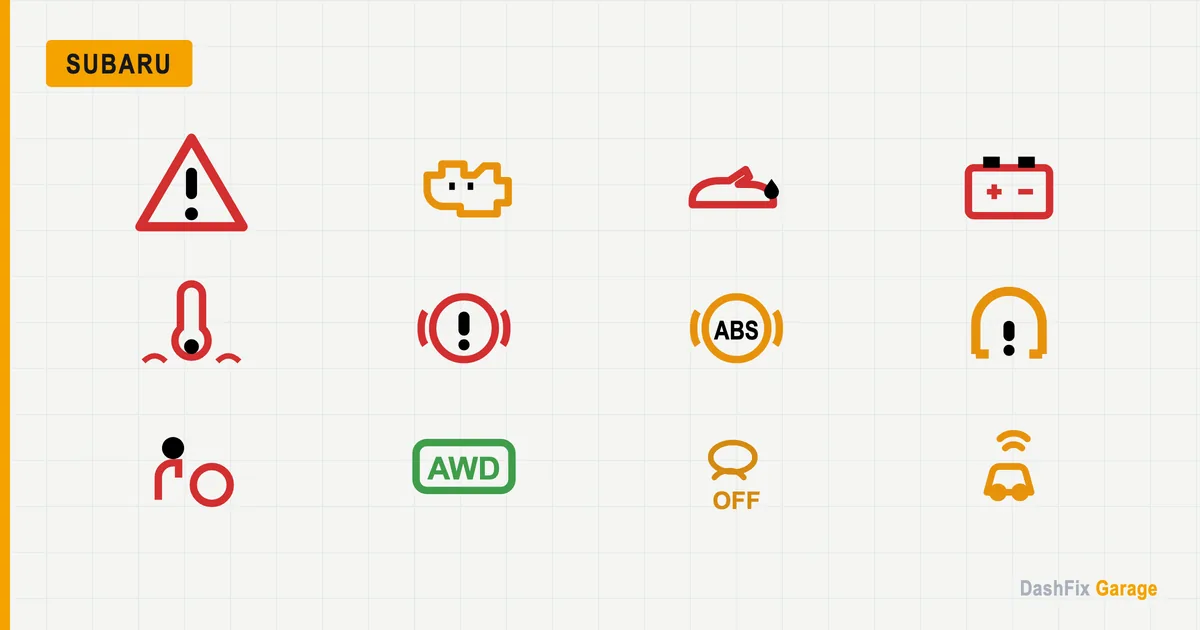
A warning light on your Subaru dashboard means the car has detected something worth telling you about - from a loose gas cap all the way up to low oil pressure. The color tells you how urgent it is: red means stop as soon as it is safe, amber means get it checked soon, and green or blue just confirms a feature is active. Scroll down to find your symbol and know what to do next.
How Subaru warning lights are color-coded
Subaru uses a three-color system across all its models, including the Outback, Forester, Impreza, Crosstrek, Legacy, and WRX.
Red is the most serious. A red light means a fault that could damage the engine, compromise your brakes, or strand you within minutes. Pull over safely and do not keep driving until you know what you are dealing with.
Amber or yellow is a caution. The car is running but something needs attention - usually within a day or two, not necessarily right now. A steady amber check engine light, for example, is not a reason to pull over immediately, but a flashing one is.
Green and blue lights are informational. High beams on, cruise control active, turn signal working - these are not warnings, just confirmations. They go out when you deactivate the feature.
If multiple lights come on at once, especially after a bump or a dead battery restart, the most likely explanation is a voltage spike resetting the system. Let the car run for a few minutes; many lights will clear on their own. If they stay on, treat each one individually starting with any red lights.
Subaru warning light symbols and what they mean
The table below covers the most common Subaru dashboard symbols. The Color column shows the typical color - some lights appear in more than one color depending on severity. Action is what to do right now.
| Symbol | Warning light | Color | What it means | What to do |
|---|---|---|---|---|
| Master Warning (Red Triangle with Exclamation) | Red | A general alert that another warning light or system message needs your attention. It often appears alongside a second light on the multi-information display. | Check the instrument cluster or MID screen for the specific fault. Do not ignore it - find the companion light and address that one. | |
| Check Engine Light | Amber | The engine control unit has stored a fault code. Could be a loose gas cap, a faulty oxygen sensor, a misfiring cylinder, or an emissions system issue. | If it is steady, tighten the gas cap and drive normally; get it scanned at a shop within a few days. If it is flashing, reduce speed and head to a shop right away - a flashing light means an active misfire that can damage the catalytic converter. | |
| Oil Pressure Warning | Red | Oil pressure has dropped below the safe threshold for engine lubrication. Running the engine even briefly can cause severe bearing damage. | Pull over immediately and shut the engine off. Check the oil level with the dipstick. If oil is low, add the correct grade. If oil is full and the light stays on after a restart, do not drive - call for a tow. | |
| Battery / Charging System | Red | The alternator is not charging the battery, or the battery itself has a fault. The car will keep running until the battery drains - typically 20 to 30 minutes on the highway. | Head straight to a shop or home. Turn off non-essential electrics (AC, heated seats, radio) to extend battery life. Do not shut the engine off mid-trip or it may not restart. | |
| Engine Coolant Temperature | Red | The engine is overheating. Subarus with the EJ and FA series engines are sensitive to overheating - head gasket damage can occur quickly. | Pull over safely, shut the engine off, and let it cool for at least 20 minutes. Do not open the radiator cap while hot. Check the coolant reservoir level once cool. If it is low, top up with the correct Subaru coolant and have the system inspected for leaks. | |
| Brake System Warning | Red | Either the parking brake is on, brake fluid is low, or there is a hydraulic fault in the braking system. Red means the brakes may not perform normally. | First check that the parking brake is fully released. If the light stays on, check the brake fluid reservoir under the hood. If the fluid is low or the pedal feels soft, do not drive - have it towed. Low brake fluid often means a leak. | |
| ABS (Anti-Lock Braking System) | Amber | The ABS system has a fault and is disabled. Your regular brakes still work normally, but the anti-lock function will not activate if you have to brake hard. | You can drive to a shop, but brake more gently than usual - especially on wet or gravel surfaces. Get the wheel speed sensors and ABS module checked. | |
| Parking Brake | Red | The parking brake is engaged or not fully released. On some Subaru models with electronic parking brakes, it can also indicate a fault with the EPB system. | Make sure the parking brake is fully disengaged. If the light stays on after releasing, check brake fluid level. If fluid is fine and the light persists, have the system inspected. | |
| Tire Pressure (TPMS) | Amber | One or more tires are 25% or more below the recommended pressure. A flashing TPMS light for about 60 to 90 seconds after startup usually means the TPMS sensor itself has a fault. | Check all four tire pressures with a gauge and inflate to the sticker value on the driver's door jamb (typically 32-36 PSI for most Subaru models). If all tires are correct and the light stays on, the sensor needs inspection. | |
| Airbag / SRS Warning | Amber | There is a fault in the supplemental restraint system, which includes the airbags and pretensioner seatbelts. The airbags may not deploy correctly in a crash. | Do not try to fix this yourself. Have it diagnosed by a technician with an SRS-capable scanner. Tampering with the system can accidentally deploy an airbag. | |
| Low Fuel | Amber | Less than about 2-3 gallons remain in the tank. Most Subaru models have roughly 30-50 miles of range remaining when this light comes on, but that varies by driving style. | Fill up soon. Running the tank completely dry can damage the fuel pump on some models, which relies on the fuel for cooling. | |
| Electric Power Steering | Red or Amber | The electric power steering system has a fault. Steering may become heavy and require significantly more effort, especially at low speeds. | You can still steer, but it takes much more effort. Head to a shop - this is usually a failed EPS motor, a sensor fault, or a software issue that a dealer can reset. | |
| VDC OFF (Vehicle Dynamics Control) | Amber | Traction and stability control have been manually turned off, or the VDC system has a fault. A steady light means the system is off; a flashing light means the system is actively working to prevent a skid. | If you turned it off intentionally, turn it back on for normal driving. If the light came on by itself and stays steady, have the system scanned. A flashing VDC light during driving is normal - it means the car is helping you stay in control. | |
| AWD Warning | Amber | Subaru's all-wheel drive system has detected an imbalance. The most common cause is mismatched tire sizes or significantly different tire wear across the four wheels. Continuing to drive with this light flashing can damage the center differential or transfer clutch. | Check that all four tires are the same brand, size, and have similar tread depth. Subaru specifies all four tires should be within 1/4 inch of tread depth of each other. If tires look fine, have the AWD system diagnosed. | |
| EyeSight Warning | Amber | Subaru's EyeSight driver assist system (pre-collision braking, adaptive cruise control, lane keep assist) is temporarily disabled or has a fault. Common temporary triggers include fog, heavy rain, direct sunlight, or a dirty windshield in front of the cameras. | Clean the windshield in front of the EyeSight cameras (located near the rearview mirror). If the light clears in normal conditions, the system is fine. If it stays on in clear weather, take it to a Subaru dealer - camera calibration or a system fault may be the cause. | |
| Transmission Temperature (AT Oil Temp) | Amber | The automatic transmission fluid is overheating. This can happen when towing, driving in stop-and-go traffic in hot weather, or repeated hard acceleration. | Pull over and let the transmission cool down for 10-15 minutes with the engine idling (not off). Once cool, check the transmission fluid level if accessible. Avoid aggressive driving until the light clears. Persistent overheating means the transmission fluid may need to be changed. |
Which Subaru lights mean stop driving now
Four warning lights on a Subaru require you to stop as soon as it is safe to do so. Do not try to make it to the next exit or drive home with any of these active.
Oil pressure (red oil can) - This is the most urgent. The engine can sustain serious internal damage within minutes of running without adequate oil pressure. Pull over immediately.
Engine overheating (red thermometer) - Subaru engines, particularly older EJ-series engines found in the Impreza, Forester, and Legacy up to roughly 2012, are known for head gasket sensitivity. An overheating episode that goes unchecked can warp the head and cost thousands to repair. Stop and let it cool.
Brake system (red exclamation in circle) - If this is on and your parking brake is definitely off, your braking ability may be compromised. Do not risk it on a public road.
Battery / charging (red battery) - You have a limited window before the engine cuts out. Make your way to a shop or home immediately, conserving battery by turning off AC and audio. Do not shut the engine off mid-trip.
Amber lights, by contrast, mean the car is drivable for now but needs attention soon - usually within a day or two. The exception is a flashing check engine light, which is amber but indicates an active misfire that should be treated as urgent.
What to do when a Subaru warning light comes on
The first thing to do is stay calm and read the color. Red means take action right now. Amber means note it and deal with it today or tomorrow. Green and blue are not warnings.
For a red light: find a safe place to pull over, put the car in park, and check the obvious things first - parking brake position, oil level, coolant level. If nothing is obviously wrong, do not restart and drive. Call for roadside assistance or a tow.
For an amber light: check the owner's manual to confirm what the symbol means for your specific model. Many amber faults can be read with an OBD-II scanner, which you can buy for under $30 or borrow from a parts store for free. The fault code will tell you exactly which sensor or system triggered the light, which saves time and money at the shop.
A few specific situations that fool people: if several lights come on at once right after a jump start or battery replacement, they usually clear after a short drive as the ECU recalibrates. And the TPMS light that flashes for about 90 seconds then goes steady means a sensor fault, not a flat tire - the tires can still be fine.
If you are unsure and the light is amber, a quick call to a Subaru dealer service department is worth it. They can often tell you over the phone whether the fault code you read is serious enough to warrant stopping immediately or whether you have a day or two to book an appointment.
Frequently asked questions
Can I drive my Subaru with the check engine light on?
If the check engine light is steady amber, you can usually drive to a shop within a day or two. Start by checking the gas cap - tighten it and drive a few miles to see if it clears. If the light is flashing, that means an active engine misfire and you should reduce speed and get to a shop the same day. A misfire left unaddressed can damage the catalytic converter, turning a $100 sensor fix into a $1,500 repair.
What does the red triangle with an exclamation mark mean on a Subaru?
That is the master warning light. It is Subaru's way of flagging that another, more specific warning needs your attention. Look at the multi-information display (the small screen in the instrument cluster) for a text message or a secondary symbol. The triangle itself is not a standalone warning - it is pointing you toward a more specific fault. Find that fault and address it.
Why did multiple Subaru warning lights come on at the same time?
The most common reason is a weak or recently disconnected battery. When voltage drops suddenly - during a jump start, a battery replacement, or even a very cold start - the ECU can temporarily lose its mind and trigger multiple warnings at once. Give the car 10-15 minutes of idling or a short drive and most lights will clear as the system recalibrates. If they do not clear, scan for fault codes to find out which system actually has a problem.
What does the Subaru AWD warning light mean and is it serious?
The AWD warning light means the all-wheel drive system has detected an imbalance, usually because the four tires are different sizes or have uneven wear. Subaru's symmetrical AWD is sensitive to this - a size mismatch forces the center differential to work against itself, which can cause internal wear over time. Check that all four tires are the same brand, size, and have comparable tread depth. If tires are matched and the light stays on or is flashing, stop driving and have a dealer inspect the AWD system.